
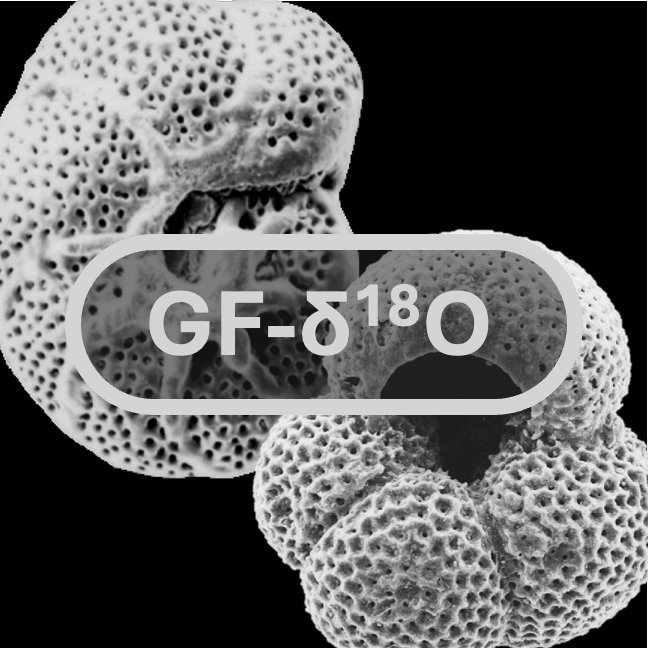
The oxygen isotope composition (δ18O) of glassy planktonic foraminiferal calcite is one of the most widely used marine paleotemperature proxies, as cooler waters result in calcite enriched in the heavier oxygen isotope. Glassy foraminifera are exceptionally well preserved, minimizing the effects of recrystallization on the δ18O signal. Reconstructing temperature from δ18O requires accounting for changes in seawater δ18O, which is influenced by salinity, regional hydrology, and global ice volume, as well as potential effects of pH and carbonate chemistry on foraminiferal δ18O. When combined with careful species selection, preservation screening, and appropriate corrections, glassy foraminiferal δ18O provides robust estimates of past upper ocean temperatures.